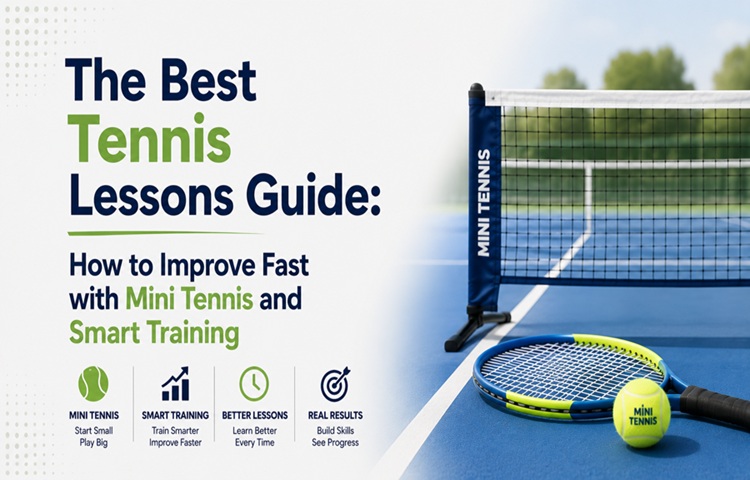
Whether you’re picking up a racket for the first time or trying to break through a frustrating plateau, tennis lessons can feel like a mixed bag. Some players spend years taking weekly classes and barely move the needle. Others seem to leap levels in a matter of months. What’s the difference? It almost always comes down to how they train — not just how often.
This guide breaks down the smartest ways to accelerate your progress, with a particular focus on two underrated tools: structured tennis lessons and the surprisingly powerful method of mini tennis.
Why Most Tennis Lessons Don’t Work (And How to Fix That)
The traditional model — show up, hit balls, go home — leaves a lot of improvement on the table. Effective tennis lessons do more than drill technique. They build game awareness, sharpen decision-making under pressure, and develop the mental habits that separate club players from competitive ones.
The biggest mistake recreational players make is treating every lesson the same. A good coach tailors each session to your specific weaknesses: maybe your footwork collapses under pressure, or your second serve becomes a liability in tight sets. When lessons are targeted and intentional, progress compounds quickly.
Before you book another block of sessions, it’s worth arming yourself with a clear training framework. That’s exactly what you’ll find in this best tennis lessons guide — a free tennis book packed with expert tips on lessons, fitness, and the kind of smart training that actually sticks.
The Mini Tennis Method: Small Court, Big Results
Mini tennis is one of the most effective — and most overlooked — tools in any player’s development toolkit. Played inside the service boxes, it strips the game down to its purest essentials: touch, timing, consistency, and court awareness.
Here’s why it works so well:
1. It forces you to develop feel. When the court is compressed, pace becomes your enemy. You can’t blast your way through points. Instead, you’re forced to develop the soft hands and precise ball control that define advanced players.
2. It accelerates pattern recognition. Mini tennis forces you to construct points — there’s no hiding behind a big forehand. You start reading angles, recognizing when to attack, and learning to be patient. These are exactly the tactical instincts that show up in full-court matches.
3. It’s the perfect warm-up. Many coaches now open every session with 5–10 minutes of mini tennis, and for good reason. It tunes your eye-hand coordination, gets your footwork activated, and builds rally rhythm before the pace ramps up.
4. It’s accessible at any level. Beginners benefit because the shorter distances and slower pace make early success possible — and early success builds confidence. Advanced players benefit because it demands a level of precision and creativity that full-court hitting simply doesn’t require.
Try ending your next warm-up with a competitive mini tennis game to 11 points. You’ll be surprised how quickly it sharpens your focus.
Building a Smart Training Routine Around Your Lessons
Tennis improvement doesn’t happen in lessons alone — it happens in the hours between them. Here’s how to structure your week for maximum progress:
On-court practice (2–3 sessions/week): Focus on specific patterns from your last lesson. Don’t just rally aimlessly. Pick one tactical theme — cross-court consistency, serve-plus-one, net approaches — and drill it with purpose.
Mini tennis sessions: Build mini tennis into every warm-up. Even 10 minutes does meaningful work on your touch and consistency.
Physical conditioning: Tennis is an athletic sport. Lateral agility, core strength, and explosive first steps make every lesson more effective. Even two 30-minute gym sessions per week produce noticeable on-court results.
Match play: Competition is where training is tested. Play points, play sets, play matches. Pressure reveals what’s genuinely learned versus what only works in drills.
Mental review: After matches, spend five minutes reflecting — not on whether you won, but on how you played. Did you execute your game plan? Where did you feel rushed or uncertain? This kind of reflective practice turns experience into growth.
The Right Tennis Book Can Change Everything
Sometimes, the missing piece isn’t court time — it’s the right information. A well-structured tennis book can reframe the way you think about training, give you drills you can apply immediately, and help you get more out of every lesson you take.
The best players aren’t just more talented — they’re better students of the game. They understand why certain techniques work, when to apply different tactics, and how to train efficiently rather than endlessly.
Combine quality tennis lessons with mini tennis practice, a structured weekly routine, and the knowledge from a smart training resource, and you’re not just hoping to improve. You’re engineering it.
Your next level is closer than you think. It just needs the right approach.







Leave a comment