
Badminton has always demanded precision and agility, but today’s game is defined by something more: speed. From lightning-fast smashes to split-second reflexes, modern badminton is a full-speed battle where milliseconds can decide matches. The evolution of pace has reshaped the sport — altering strategies, demanding new training approaches, and thrilling global audiences like never before.
The Rise of Speed in Modern Badminton
In the past, badminton matches often involved long, tactical rallies that relied on placement and stamina. Today, those slow-burning exchanges have been replaced by rapid-fire duels. The shift began with the introduction of rally point scoring in 2006, which increased the pressure on players to score quickly and minimized the luxury of passive play.
Modern racket technology has also played a role. Lightweight carbon-fiber frames allow players to generate extreme swing speeds, while synthetic shuttlecocks hold up better under fast-paced conditions. These advances have made high-speed exchanges the new normal.
Breaking Down the Types of Speed
Shot speed has become a badge of honor. In 2023, Malaysian player Lee Zii Jia recorded a smash speed of over 500 km/h — faster than most professional tennis serves. But speed in badminton goes beyond smashes.
Court speed — how fast a player moves, pivots, and recovers — is equally critical. Elite players execute dozens of explosive directional changes in a single rally. Recovery speed between shots directly impacts a player’s ability to maintain pressure.
Reflex and reaction speed is especially vital in doubles. At the top level, players respond to shuttle movements in less than half a second, anticipating not only the shot direction but also its angle and speed.
Rally tempo, the overall pace of exchanges, has risen steadily. Matches today often feature back-to-back 10+ shot rallies where each movement demands peak physical and mental alertness.
Strategy Shaped by Speed
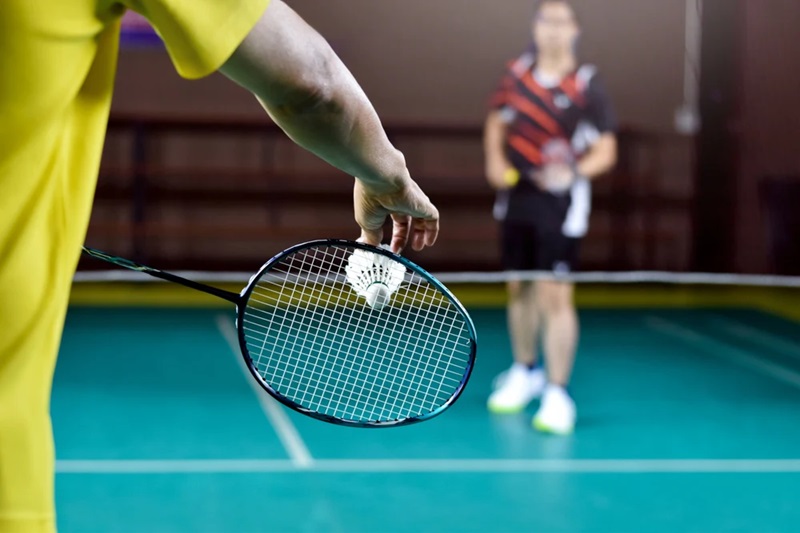
With the game moving faster, tactics have evolved too. Aggressive, attacking formations dominate doubles, while singles players now look for early openings to control the rally. Players are trained to attack early, pressure the net, and follow up aggressively — all while being ready for lightning-fast counters.
Defensive players also rely on speed to turn defense into attack. Sharp lifts, deceptive clears, and drive returns all depend on quick feet and quicker minds. Positioning has become more dynamic, with players constantly adjusting their stance and distance from the shuttle.
Top players like Viktor Axelsen and An Se-young have mastered this hybrid approach — mixing pace with positional intelligence, creating a style that is both explosive and controlled.
Training Focus: Speed from All Angles
To match the game’s demands, training has adapted. Players now undergo intense physical conditioning that focuses on short bursts of speed, agility drills, and muscle recovery. Plyometric exercises and resistance band movements help sharpen lateral motion, while shuttle-run variations train anaerobic endurance.
Technical drills have also shifted. Multi-shuttle drills mimic match-level pressure, while net drills improve shot timing and recovery. Video analysis is used to fine-tune footwork efficiency, allowing players to gain fractions of seconds per movement.
Equally important is mental speed — decision-making under pressure. Coaches now integrate scenario-based training to sharpen a player’s pattern recognition and rally reading skills.
The Physical Toll of High-Speed Play
Faster rallies come at a cost. Knee, ankle, and shoulder injuries are common due to rapid stops, pivots, and jumps. Without proper recovery protocols, players risk burnout and shortened careers.
Elite players use sports science to manage this load. Cold therapy, sports massages, and precise periodization help maintain peak performance without overtraining. Smart wearable devices are also becoming common to track recovery metrics.
Speed and Spectacle
From a fan perspective, speed has made badminton more exciting to watch. High-speed rallies, reflex exchanges at the net, and midair smashes are visual highlights that regularly go viral. Broadcasters are investing in slow-motion replays and shuttle-tracking tech to capture the game’s blistering pace.
This visual intensity is helping badminton grow globally, especially among younger audiences drawn to high-intensity sports.
Looking Ahead
As technology continues to influence training, and players push physical boundaries, speed will remain central to the game’s evolution. Advanced analytics and wearable sensors are being used to refine techniques and reduce wasted motion. National federations are identifying speed and explosiveness as key attributes in youth development programs.
But speed alone won’t win matches. As players get faster, strategy and decision-making will play an even bigger role. The future of badminton will be a blend of pace, precision, and mental clarity — where only those who can adapt on the move will stay ahead.





 Fully Sport
Leave a comment